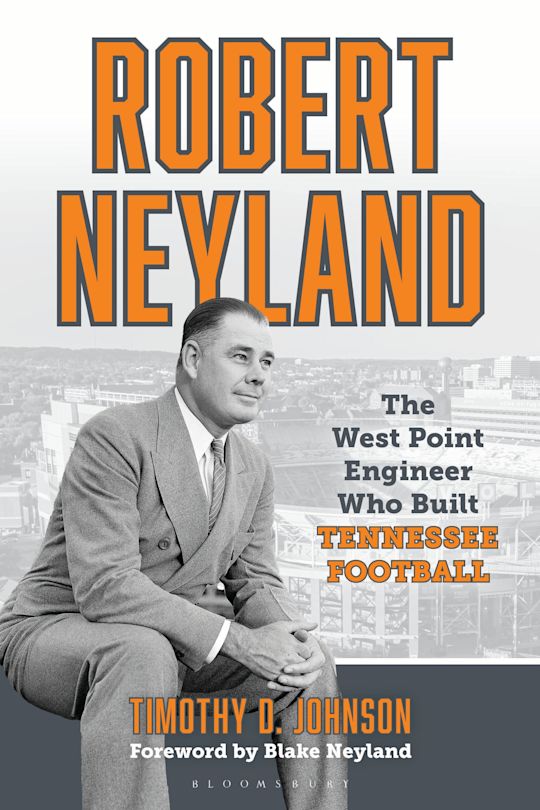
Robert Neyland, The West Point Engineer Who Built Tennessee Football”: An Author Talk with Timothy Johnson
Free, In-person Program, Registration Required, Seating Limited to 100
Location: UT Arboretum Auditorium, 901 S. Illinois Avenue, Oak Ridge, Tennessee, 37830
Friday, October 16th, 12:00 Noon – 1:30pm
When football fans hear the General’s famous “Game Maxims” for football victories, many don’t realize the history behind the man Tennessee’s football stadium is named for. University of Tennessee football coach Robert R. Neyland was not your typical college football coach. A graduate of West Point and veteran of both world wars, the “General” is not just a nickname. Neyland was a Brigadier General stationed in the China-Burma-India Theater during World War II. Neyland often played a dual role as an army officer and football coach, shifting seamlessly between the two professions. At the University of Tennessee, he ran his program like the army and amassed an impressive 173-31-12 record with a career .829 winning percentage.
On Friday, October 16th, noon-1:30 p.m.(Eastern Time), the eve of the traditional Tennessee vs. Alabama rivalry football game, the UT Arboretum Society is pleased to sponsor a lecture and book signing by Timothy D. Johnson, author of “Robert Neyland: The West Point Engineer Who Built Tennessee Football,” at the UT Arboretum Auditorium, 901 S. Illinois Avenue, Oak Ridge. The talk is free, but registration is required to reserve your seat. Attendance is limited to 100 people for this in-person program. Please be sure to register for all members of your party. Union Avenue Books of Knoxville is a co-sponsor of the event and will be on site selling the book which can be signed by the author.
The release of this book coincides with the 100th anniversary of Neyland’s appointment as head football coach at the University of Tennessee in 1926. Johnson provides deep insight into Neyland’s life and incredible career. Tennessee is the only university to have a football coach with these military credentials. Featuring interviews with the only living former players from the Neyland era and including new details from the Robert R. Neyland Family Papers, Johnson brings Neyland’s story to life, revealing how Neyland’s success resulted from his stern discipline and ability to put together consistently dominant defenses. It’s a story that is sure to not only fascinate fans of Tennessee football, but sports and military historians, as well. General Neyland’s grandson, Blake Neyland, who wrote the book’s forward, will be a special guest at the lecture and he will also be available to sign books.
Author Timothy D. Johnson is the Elizabeth Gentry Brown Professor of History at Lipscomb in Nashville where he has taught since 1991. He has written articles for journals, popular magazines, and encyclopedias, and has authored or edited eight previous books. Johnson has been a research fellow at the Virginia Historical Society as well as at Yale University, and has appeared on The History Channel, C-SPAN, and Public Television.
For questions or registration issues contact Michelle at mcampani@utk.edu.

Third Saturday Hike
Saturday, October , 9am
No registration Required, No Pets Please
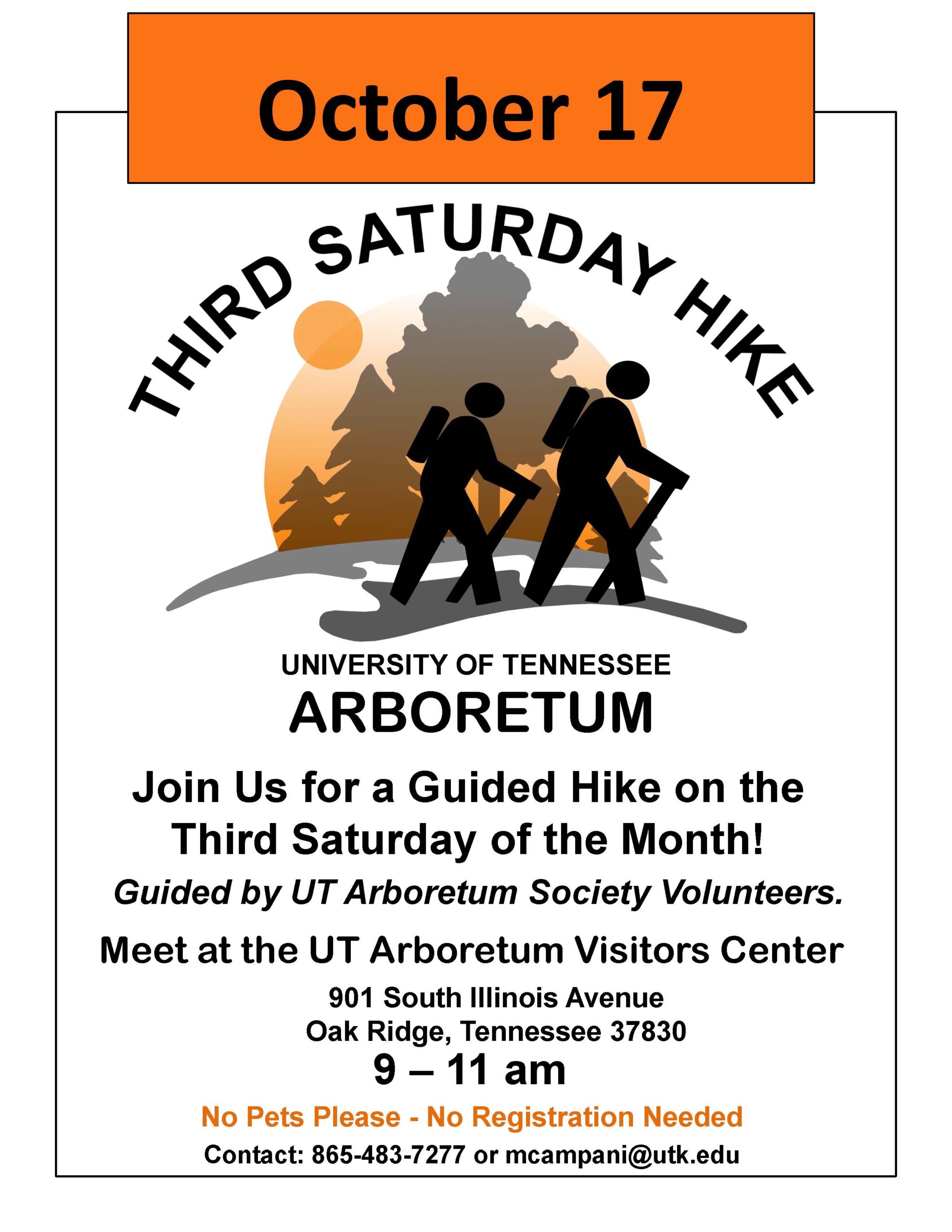
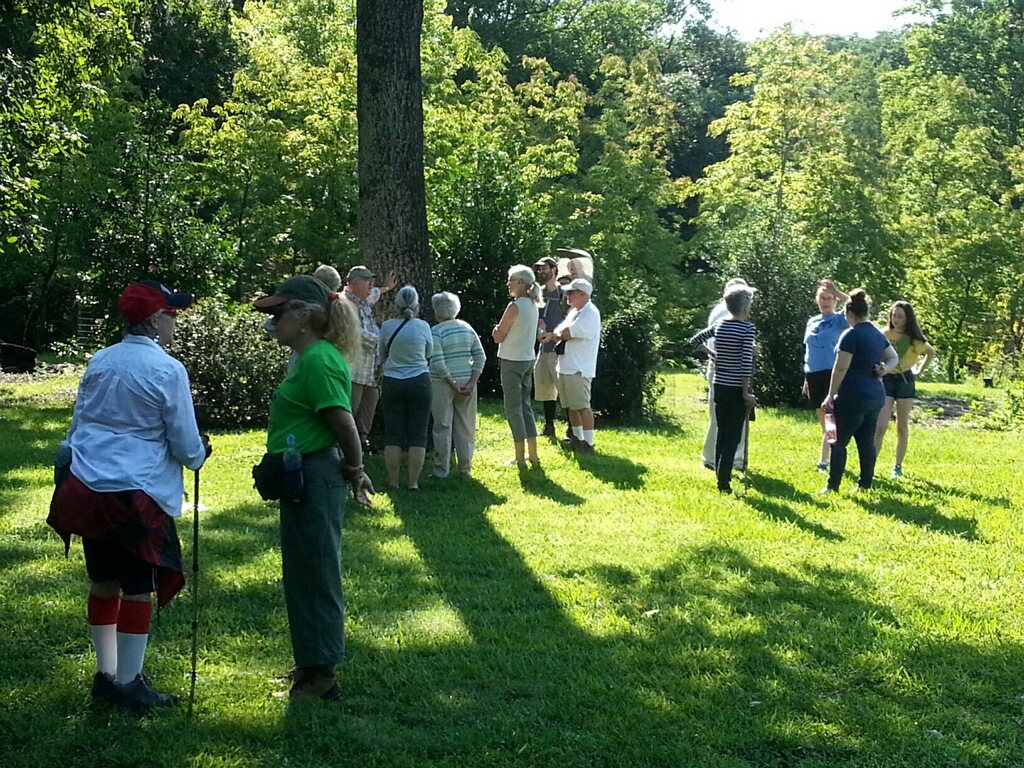
Saturday, October 17th at 9am EDT. Meet at the Visitors Center Kiosk at the University of Tennessee Arboretum, 901 S. Illinois Avenue, Oak Ridge TN.* and join volunteers from the University of Tennessee Arboretum Society for an guided hike 1.5- 2 miles long. We want these hikes to be an introduction to the arboretum and enjoyable for all. Please let the leaders know if you have any special needs for the hike.
No registration is necessary. No pets please. Please bring plenty of water and wear comfortable shoes.
*GPS sometimes directs people to Union Valley Road which is a service entrance only. Please use our main entrance on Illinois Avenue.
Guided Bird Walk: Wednesday, September 16th at 8am
Register to Reserve Your Spot
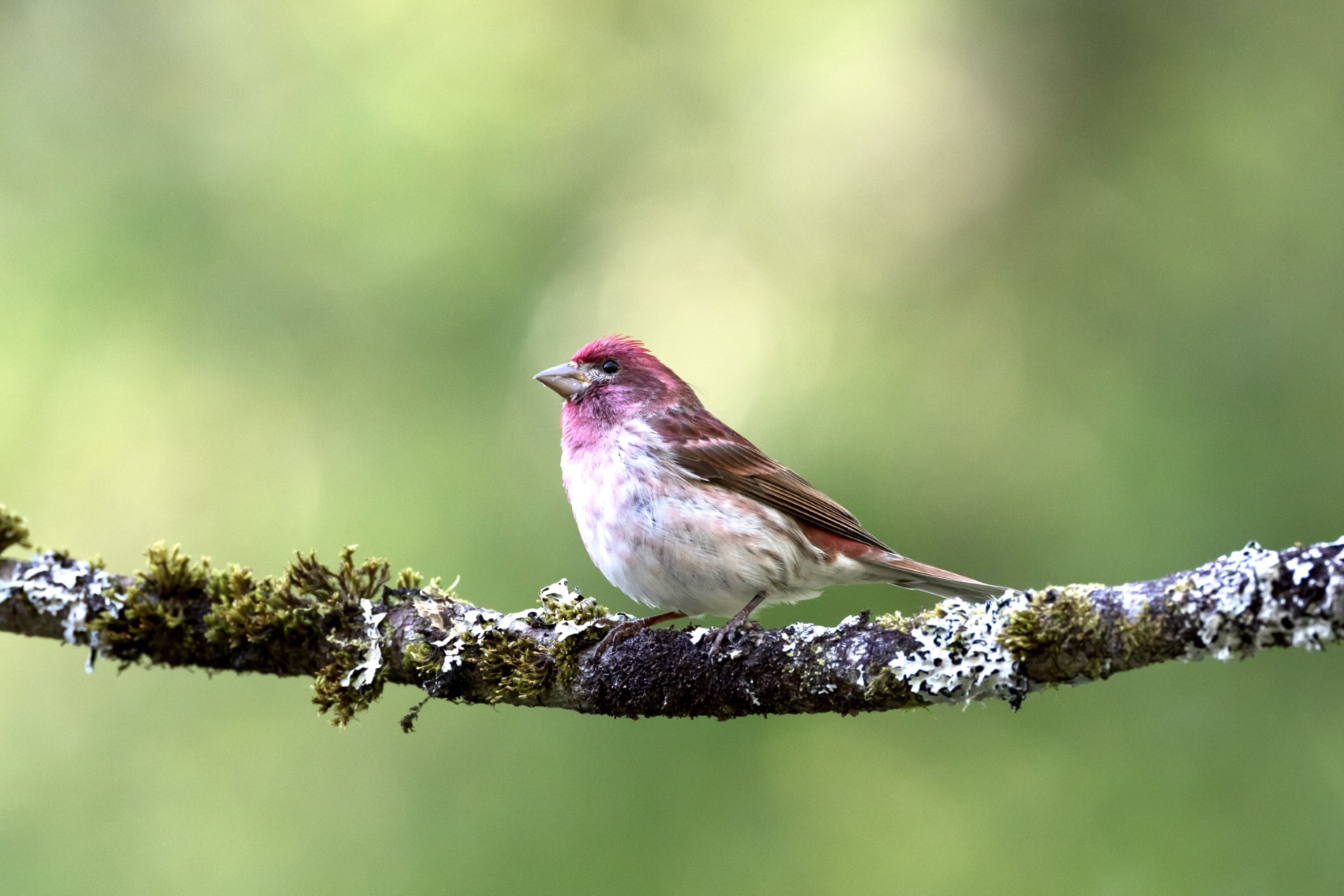
The American Museum of Science and Energy (AMSE) and the University of Tennessee Arboretum are partnering together to launch a new Citizen Science Birding Program. The September Guided Bird Walk will be held at the UT Arboretum on Wednesday, September 16th at 8:00 am. Please meet at the kiosk outside of the UT Arboretum Visitors Center. This guided walk will be led by volunteers from the American Museum of Science and Energy in Oak Ridge. The event is limited to 30 participants. Registration is required to save your spot. No pets please. Please wear comfortable shoes, bring water to stay hydrated, bring hiking poles and binoculars if you wish. There will be a limited supply of loaner binoculars on a first come basis at the hike.
“Bird watching is now North America’s second most popular outdoor activity (second only to gardening).” Says AMSE educator Corky Witt. “There must be something to it—so come out with us and find out why!”
For questions or more information please contact Courtney Beard at cbeard@amse.org or 865-385-6081
Location: 901 S. Illinois Avenue, Oak Ridge, Tennessee 37830*
*GPS sometimes directs people to Union Valley Road which is a service entrance only. Please use our main entrance on Illinois Avenue.